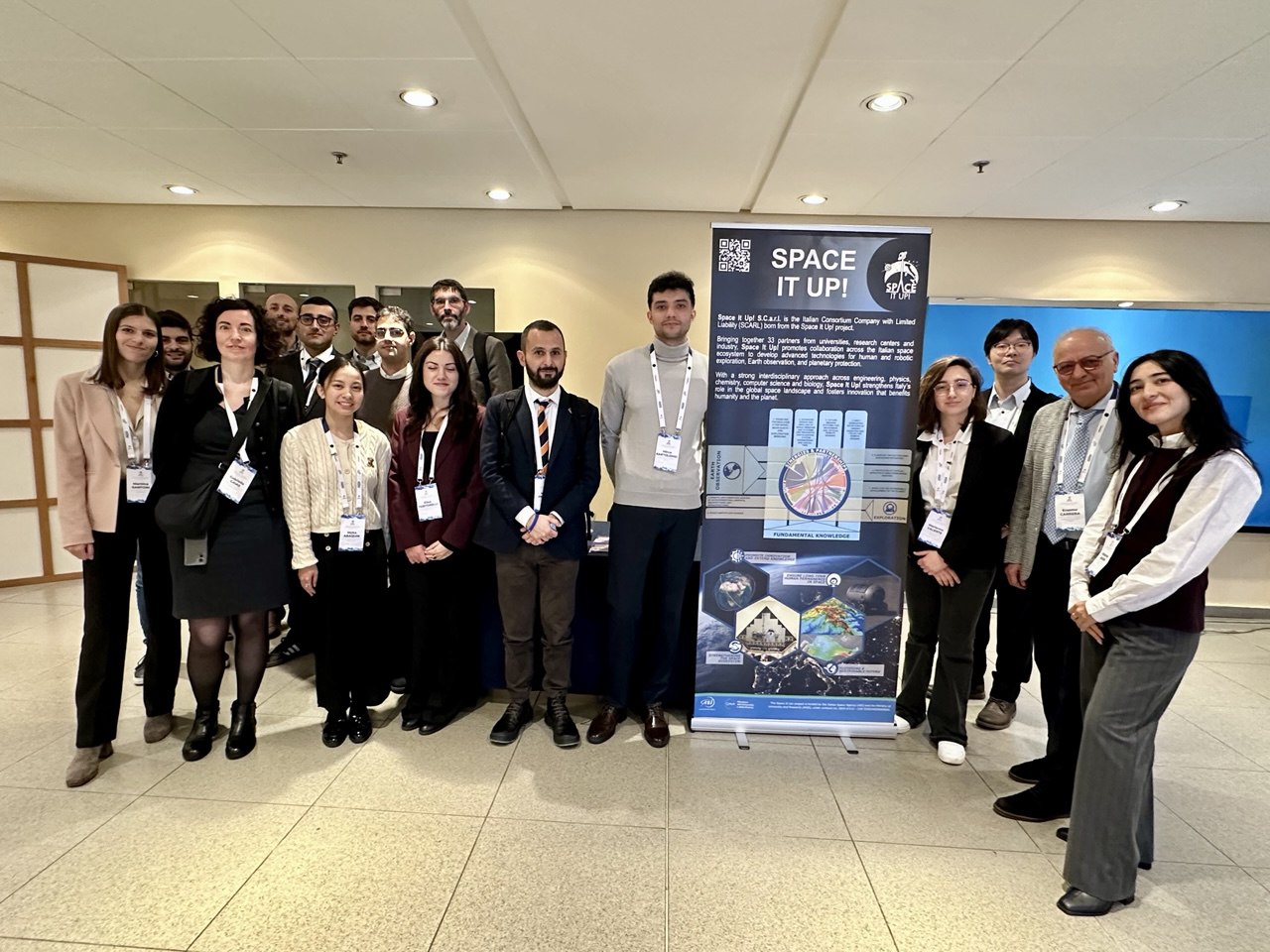
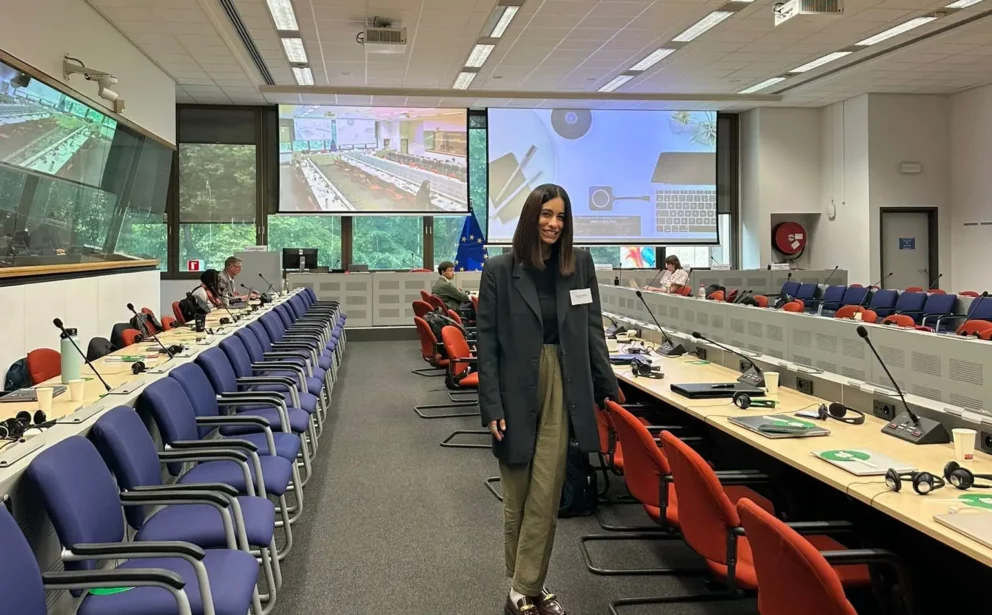
Space It Up! recently participated in the Copernicus Thematic Workshop on Climate Risks for Insurance & Finance in Brussels, organised by EUSPA in collaboration with the European Commission and the Copernicus Entrusted Entities.
The workshop brought together policymakers, financial institutions, insurers and Earth Observation experts to discuss how climate intelligence and Earth Observation (EO) data can support a more resilient European economy.
One message emerged clearly throughout the event: climate change is no longer viewed solely as an environmental challenge. It is increasingly recognised as a financial and economic risk that requires trusted data, operational tools and common methodologies to support informed decision-making.
European policy: from climate adaptation to resilience by design
The European Commission presented the evolving European climate resilience framework, which promotes a shift from reactive responses to proactive adaptation, often described as “resilience by design.”
Discussions highlighted the need to strengthen climate risk management, improve disaster prevention and recovery mechanisms, and expand access to reliable climate information through Copernicus services. Particular attention was given to increasing interoperability between climate, financial and insurance datasets.
A recurring theme throughout the workshop was the need to combine Earth Observation with social, economic and insurance information. Participants stressed that climate risks cannot be understood through environmental indicators alone. Effective decision-making requires an integrated perspective that connects hazards, exposure, vulnerability and socioeconomic impacts, supported by stronger collaboration between climate scientists, financial institutions, insurers and policymakers.
Sustainable finance and the role of regulation
The growing need for integration was also reflected in discussions on sustainable finance.
Participants highlighted that European sustainable finance policies aim to mobilise investment towards sustainable activities, improve the comparability of sustainability disclosures and strengthen the management of climate-related financial risks.
The EU Taxonomy, Corporate Sustainability Reporting Directive (CSRD), Sustainable Finance Disclosure Regulation (SFDR) and European Green Bonds framework were presented as key pillars supporting these objectives. Together, they help redirect capital towards sustainable investments while improving transparency and climate risk management.
Another recurring message was the importance of establishing a common language between climate science, finance and insurance, particularly in the field of climate adaptation.
Earth Observation for insurance and finance
One of the workshop’s central themes was the growing role of Earth Observation in insurance and finance.
EO is increasingly recognised as a trusted and independent source of information capable of supporting disaster assessment, claims management, exposure and vulnerability analysis, and catastrophe risk monitoring. Several operational use cases were presented, including flood assessment, post-event damage mapping and parametric insurance.
While numerous EO-based proof-of-concepts already exist, participants agreed that the next challenge is scaling these solutions into operational and commercially sustainable services. Limited awareness of EO capabilities and the lack of integration into existing business workflows remain major barriers to wider adoption.
For Earth Observation to unlock its full potential, participants emphasised that EO must increasingly be recognised as a business enabler capable of supporting regulatory compliance, operational planning and strategic decision-making.
Climate risk supervision and investment
Representatives from the European Insurance and Occupational Pensions Authority (EIOPA) and the European Banking Authority (EBA) highlighted that physical climate risks are becoming a core focus of financial supervision.
Key priorities include measuring exposure to climate hazards, assessing asset and portfolio vulnerability, monitoring risks over time and integrating climate considerations into supervisory frameworks and business operations.
Participants also identified the lack of harmonised historical datasets on damages, insurance claims and post-event information as an important challenge, reinforcing the value that Earth Observation can provide.
The European Investment Bank (EIB) presented climate adaptation finance as an increasingly strategic area, highlighting the need to bridge the gap between policy frameworks and operational implementation through common standards and methodologies. The role of Copernicus data in supporting investment decisions and assessing hazard exposure and asset vulnerability was also underlined.
Throughout the discussion, trustworthiness, transparency and traceability emerged as essential requirements for wider adoption of EO-derived information by the financial sector.
Building trust through cross-sector collaboration
The European Bank for Reconstruction and Development (EBRD) focused on the importance of increasing confidence in Earth Observation within the financial sector.
Through its partnership with ESA, the Bank is promoting the integration of EO into projects supporting sustainable development and climate action worldwide. Examples presented during the workshop included applications for water resource management and pollution monitoring, demonstrating how space-based data can generate tangible operational value.
Main conclusions
The workshop confirmed that the debate is moving beyond demonstrating the value of Earth Observation in climate risk. The main challenges are now organisational rather than technical, including limited awareness of EO capabilities, integration into existing workflows and the need to demonstrate clear business value. The focus is therefore shifting towards trusted, operational and scalable services that support climate risk management and resilience.
At the same time, insurance companies, banks, regulators and public institutions were found to share similar needs. These include reliable and standardised climate risk information, exposure and vulnerability assessment tools, post-event damage evaluation capabilities, and trusted data sources to support regulatory compliance and investment decisions.
Overall, there is a strong expectation that Copernicus services and EO-based solutions will play an increasingly important role in building a more climate-resilient financial and insurance ecosystem across Europe.
Space It Up!’s perspective
From Space It Up!’s perspective, the workshop reinforced the growing need to bridge the gap between Earth Observation capabilities and operational decision-making. As financial institutions, insurers and public authorities increasingly seek reliable climate intelligence, the challenge is no longer access to data, but transforming EO information into trusted, user-oriented services that fit existing workflows and support real-world risk management.
The discussions strongly echoed Space It Up!’s vision that the real value of Earth Observation lies not only in generating data, but also in transforming emerging capabilities into scalable solutions that support climate resilience, sustainable development and societal benefit.